
March 2026 News Editorial Recap: Montana + National/Global Overview
March of 2026 was a busy one. Local protests, big tax changes, political shake-ups, nasty weather, and some major legal and economic news all hit at once. Here’s a breakdown of the biggest stories from Montana and beyond.
- Large Protest in Missoula Draws Thousands

(Photo courtesy of KPAX)
About 15,000 people showed up to a “No Kings” protest in Missoula, pushing back against national leadership, inflation, and a range of federal policy decisions. That number caught a lot of people off guard since organizers had expected roughly half that turnout. The demonstration was part of a wider wave of protests that rolled through cities across the country that same weekend, driven by frustration over federal budget cuts, rising costs, and concerns about executive overreach. Local officials called it one of the biggest single-day demonstrations the city had seen in recent memory, and the groups behind it made clear they plan to stay active heading into the June primaries.
The impact: Political energy in Montana is running high, even in a state that leans Republican overall. National issues like prices and federal policy are showing up in very local ways, and that energy is likely to carry into the 2026 election season.
- New Boating Fees in Whitefish, and 2,000+ Acres Permanently Protected
Whitefish city officials signed off on significant increases to boat launch fees this month. The money goes toward lake maintenance and invasive species prevention programs, which have become a real concern for Montana waterways. On the conservation side, a large land easement near Potomac locked in permanent protection for over 2,000 acres. The deal was put together by a private landowner and a Montana land trust. The land sits in a key corridor for wildlife movement between the Bob Marshall Wilderness and the Rattlesnake area, benefiting grizzly bears, elk, and other animals that depend on connected habitat.
The impact: Non-residents using Whitefish boat launches will feel the fee increases most, though locals generally support where the money is going. The conservation easement is a big win for long-term biodiversity in the region, especially as development pressure keeps growing around the Flathead Valley.
- “The Montana Plan” Moves Forward
Initiative I-194, known as “The Montana Plan,” is pushing to stop corporations from spending money to influence Montana elections. It started as a proposed constitutional amendment, but the state Attorney General and the Montana Supreme Court both kicked it back over a single-subject rule issue, so organizers refiled it as a statutory initiative. By March, signature gathering was in full swing with a goal of 100,000 signatures across 50 legislative districts before the June 19 deadline. The initiative is built around the argument that states have the power to redefine what corporate charters allow. If it works, Montana could become the first state to meaningfully push back on Citizens United. Support is strong across party lines, with polling showing around 80% of Americans believe outside money in elections is corrupting or at least looks that way.
The impact: If it makes the ballot and passes, it could be a model for other states. Legal fights are almost certainly ahead regardless, but the fact that it has gotten this far says a lot about where voters are on the issue.
- March Declared “Montana Agriculture Month”
(Photo courtesy of FFA)
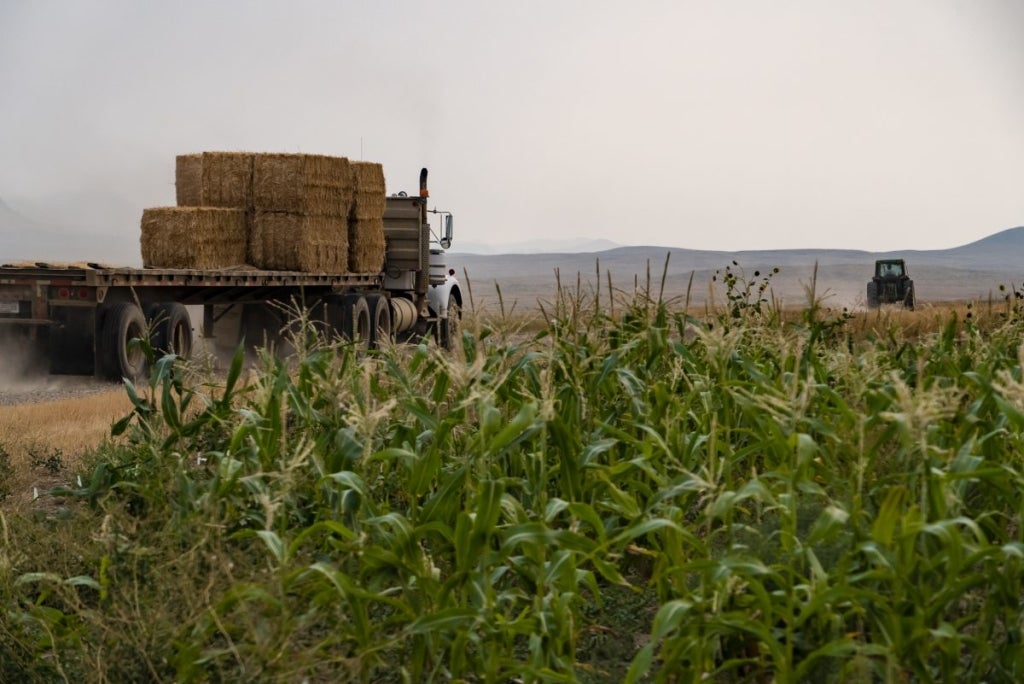
Governor Gianforte signed a proclamation this month recognizing March as Montana Agriculture Month. Agriculture brings in over $5 billion to the state economy every year, covering everything from wheat and barley to cattle ranching. The proclamation was meant to spotlight that contribution while also acknowledging real pressures the industry faces, including rising input costs, drought conditions, and federal policy uncertainty. Gianforte used the occasion to highlight state efforts around water rights and cutting regulatory red tape for agricultural producers.
The impact: It reinforces how central farming and ranching are to Montana’s identity and economy, and puts a spotlight on rural challenges that don’t always get enough attention.
- Montana’s Property Tax Overhaul Hits a Key Deadline
March was an important month for homeowners because of a major deadline tied to the state’s new property tax system. Residents had until March 20 to apply for the new Homestead Reduced Rate, which gives lower tax rates to people living in their primary residence or renting long-term. For full-time residents, the new system could mean savings of around $700 a year. The trade-off is that second homes, vacation properties, and short-term rentals are looking at tax bill increases somewhere in the range of 60 to 68% compared to 2024. That shift is intentional, putting more of the burden on investment and vacation properties and less on people who live here full time.
The impact: Good news for most Montana residents, real sticker shock for anyone with a vacation cabin or Airbnb. It also stirs up tension in places like Bozeman and Whitefish, where out-of-state ownership has already become a hot-button issue. The deadline itself caused enough confusion that Gianforte’s office sent out multiple public reminders throughout the month.
- Republican Primary Battles Heating Up Across Montana
The March 4 candidate filing deadline revealed serious internal divisions in the Montana Republican Party heading into the 2026 primaries. Several moderate Republican incumbents are now facing challenges from members of the Montana Freedom Caucus, a state affiliate of a national network tied to former Trump advisor Mark Meadows. In Great Falls, a self-described “RINO hunter” is taking on a moderate Senate incumbent. In Hamilton, a Freedom Caucus challenger is going after a well-known moderate who was central to writing the state’s recent budget and property tax reforms. On the federal side, Rep. Ryan Zinke announced he won’t seek reeection, opening up a congressional seat that will draw significant outside attention and money.
The impact: These Republican versus Republican races could reshape Montana’s legislature more than any general election contest. Property taxes and fiscal policy are at the center of the intraparty tension, which shows just how much the tax overhaul has stirred things up. Zinke’s open seat will likely be one of the more watched congressional races in the region this cycle.
- Harsh Weather Hits Central and Northern Montana

(Photo courtesy of MT Free Press)
Cold temperatures, strong winds, and late-season snow made life difficult across a big chunk of Montana in March. Great Falls took notable hits, including wind damage to power lines and public infrastructure. Farmers and ranchers dealt with disrupted planting schedules and tough conditions for livestock. Several counties activated emergency management teams, and local officials renewed calls for more state investment in rural infrastructure. The timing was rough, coming off a winter that had already stretched road maintenance budgets thin.
The impact: Travel disruptions, agricultural setbacks, and more strain on infrastructure that was already under pressure. It added to the general stress on rural communities juggling a lot of competing challenges right now.
Your Global News:
- Supreme Court Strikes Down Trump’s Tariffs and He Immediately Pivots
On February 20, the Supreme Court ruled 6 to 3 that President Trump did not have the authority to impose tariffs under the International Emergency Economic Powers Act, known as IEEPA. Chief Justice John Roberts wrote the majority opinion, arguing that the power to impose tariffs belongs to Congress under the Constitution and that IEEPA simply could not stretch far enough to cover what the administration had been doing. Within hours of the ruling, Trump signed a new order imposing a 10% global tariff using a different legal authority, Section 122 of the Trade Act of 1974, and the next day announced plans to push it to 15%, which is the ceiling under that law. The ruling also opened the door for businesses to seek refunds on tariffs paid under IEEPA, with economists estimating those collections totaled around $175 billion. The refund process is expected to be complicated and drawn out for years.
The impact: It is a significant check on executive power that will likely influence how presidents use emergency authority going forward. For consumers, import costs are still going to be high. Economists have described the overall tariff regime, even after the ruling, as the largest effective tax increase since 1993.
- One Year of Trade War: Where Things Stand

March marked roughly one year since Trump’s “Liberation Day” tariff announcements, and major analyses dropped this month taking stock of what actually happened. The headline finding from a McKinsey Global Institute report was surprising: global trade did not collapse. Both U.S. imports and Chinese exports hit record highs in 2025. That said, the shape of trade shifted significantly. The U.S. trade deficit with China fell to its lowest level in over two decades, but that gap mostly moved to Vietnam and Taiwan, where bilateral deficits widened to records. The Trump administration added more uncertainty in March by launching new trade investigations under Section 301 into alleged unfair practices by China, Vietnam, Taiwan, Mexico, Japan, the EU, and dozens of other economies, pointing toward another round of tariffs ahead. A Washington Post poll found 64% of Americans disapprove of the president’s handling of tariffs, with higher prices for everyday goods being the main complaint.
The impact: Supply chains are being reorganized in ways that will take years to fully play out. AI-related trade was the biggest single driver of global trade growth in 2025 and partially cushioned the blow from tariff disruptions elsewhere. But metal products, electronics, vehicles, and clothing all remain more expensive than they were before the trade war started.
- Middle East Strikes Send Oil Prices Surging

U.S. and Israeli military strikes on Iran at the end of February set off a spike in global energy prices that dominated a lot of March’s economic news. Brent crude jumped as much as 13% in early March, briefly crossing $82 a barrel. The concern centered on the Strait of Hormuz, which handles about 20% of global oil and a similar share of liquefied natural gas. Over 150 ships dropped anchor in the waterway in the days after the strikes, and several Middle Eastern ports paused operations because of nearby drone activity. The price jump rippled outward into freight costs, food prices, and basically anything that depends on moving goods around the world.
The impact: Higher energy prices pile onto tariff-driven inflation that was already making things more expensive for American households. Disruptions around the Strait of Hormuz also have implications far beyond the U.S., affecting global supply chains in ways that could linger for months.
- Deadly Tornado Outbreak and Major Blizzard
A tornado outbreak from March 5 through 7 produced around 30 tornadoes across the Midwest and South, causing deaths, injuries, and widespread property damage. It was followed within days by a powerful storm system that brought blizzard conditions across a broad stretch of North America, knocking out power for over 500,000 people and shutting down travel in multiple states. FEMA activated disaster response operations in several affected areas, and preliminary damage estimates ran into the hundreds of millions of dollars.
The impact: The back-to-back events stretched emergency response systems hard and renewed debates about infrastructure preparedness. They also added to a growing body of evidence that the spring severe weather season is becoming more volatile and more costly.
- Meteor Explosion Seen Across Multiple U.S. States

(Photo by New York Times)
A large meteor fireball exploded over the eastern United States, creating a sonic boom heard across several states. The event generated a flood of social media reports and a surge of calls to emergency services from residents who initially thought something had exploded nearby. NASA and the American Meteor Society confirmed it was a bolide, a particularly bright meteor that explodes as it enters the atmosphere, and estimated the object was about one meter in diameter before it broke apart. No fragments were expected to have reached the ground and no damage was eported.
The impact: It was a rare event that caught a huge number of people off guard and sparked genuine public curiosity. It also quietly reignited conversations in Washington about funding for planetary monitoring systems, which have faced budget pressure in recent years.
- Congress Debates War Powers Amid Rising Iran Tensions
Following the late-February strikes on Iran, lawmakers on both sides of the aisle called for hearings on the limits of presidential military authority. Senate Foreign Relations Committee members raised questions about whether the strikes required congressional authorization under the War Powers Resolution. A bipartisan group of senators introduced legislation that would require the administration to consult Congress before any further escalation against Iran. The debate also touched on whether existing authorizations for use of military force, some of them dating back to 2001 and 2002, are still the right legal basis for current military activity.
The impact: It raises real questions about the balance of war-making authority between Congress and the executive, and it’s one of the few issues generating genuine bipartisan concern right now. Efforts to update or repeal older military authorizations may gain some momentum as a result.
- Extreme Weather Increasingly Linked to Climate Change
Scientists released several major analyses in March confirming that recent extreme weather events, including a record-breaking western U.S. heatwave, would have been virtually impossible without human-caused climate change. The findings came alongside data showing that 2025 was one of the hottest years on record globally and that wildfire risk across the western United States is tracking well above historical averages heading into 2026. In Montana specifically, state forestry officials noted that a federal reorganization of the U.S. Forest Service, including a planned relocation of its headquarters from Washington to Salt Lake City, is creating operational uncertainty around wildfire coordination ahead of fire season.
March 2026 shows just how connected local and global events really are. Property taxes, primary races, and ballot initiatives in Montana are all playing out against a backdrop of Supreme Court rulings, trade wars, Middle East tensions, and a rapidly changing climate. The events of this month are a good reminder that what happens in Washington and around the world does not stay there. It shows up in your tax bill, at the gas pump, and in the political fights happening right in our Montana backyard.
Sourcing:
https://montanafreepress.org/2026/03/04/montana-legislative-primaries/
https://ballotpedia.org/2026_Montana_legislative_session
https://truthout.org/articles/montana-has-an-ambitious-plan-to-end-dark-money-in-elections/
https://montanabudget.org/report/tax_2025_leg
https://parsonsbehle.com/insights/new-montana-state-income-and-property-taxes-for-2025-and-2026
https://bozemanrealestate.group/blog/understanding-montana-property-taxes
https://news.mt.gov/Governors-Office/Gov-Gianforte-10-Days-Remain-to-Claim-Lower-Property-Tax-Rates
https://revenue.mt.gov/property/property-tax-changes/2026-property-tax-information
https://taxfoundation.org/research/all/federal/trump-tariffs-trade-war/
https://cnbc.com/2026/04/03/trump-tariffs-trade-war-impact.html
https://piie.com/blogs/realtime-economics/2026/trump-china-trade-wars-five-takeaways-us-imports-2025
https://kpmg.com/us/en/articles/2026/global-trade-outlook-2026.html
https://washingtonpost.com/business/2026/03/29/tariffs-trump-liberation-day/
https://weforum.org/stories/2026/03/us-trade-deficit-international-trade-stories-march-2026/
https://skadden.com/insights/publications/2026/02/the-supreme-court-ends-ieepa-tariffs
https://scotusblog.com/2026/02/supreme-court-strikes-down-tariffs/
https://budgetlab.yale.edu/research/state-us-tariffs-scotus-ruling-update